Worship and Community
The New Millennium Reformed Congregation welcomes, as a living and open community, all who thirst for the word of God. Our regular gatherings form the spiritual center of our church on the banks of the Bega.
Sunday worship – 10:00 a.m.
Every Sunday morning at 10:00 a.m. we hold our Sunday scripture-expository worship. After the sermon we warmly welcome those present to an informal fellowship meal.
Sacraments and ministries of the Reformed Church
1Baptism
Baptism is, according to the Reformed confession, the sign and seal of the covenant. We baptize infants and adults within the Sunday services before the congregation.
2Lord's Supper
The Lord's Supper is the remembrance of Christ's sacrifice and the living of the believers' spiritual fellowship with Christ. We administer it in the following order through the year: the closing Sunday of the January ecumenical Week of Prayer, Invocavit Sunday, Easter, Pentecost, Confirmation, New Bread, the Sunday closest to the Reformation festival, the first Sunday of Advent, and Christmas.
3Confirmation & Catechetical preparation
During the catechetical preparation of young people and adults they become familiar with the Bible and the Reformed Catechism, so that they may consciously bear witness to their faith.
4Marriage blessing & Pastoral care
Marriage preparation and the request of God's blessing upon the marriage in our church. Our pastor is also available for personal, confidential pastoral conversations.
Pastoral office and enquiry
Pastor: Gazda István • Phone: +40 356 467 408 • Mobile: +40 770 652 480
Our congregation's community life
Our story
In the Reformed life of Timișoara, in the last months of 1989, after almost a hundred years, the idea of building a church arose again in earnest. The church members who stood in solidarity with the cause of Tőkés László, under the leadership of their pastor, resisted the episcopal arbitrariness that had entered the service of the communist power. At the same time they felt behind them the support not only of the Reformed and the Hungarians, but also of the Romanian-speaking majority of the city and of the other confessions.
The sympathy demonstration turned into a popular uprising against the dictatorship. The dictatorship fell, the city breathed again, and the Reformed dreams took flight.
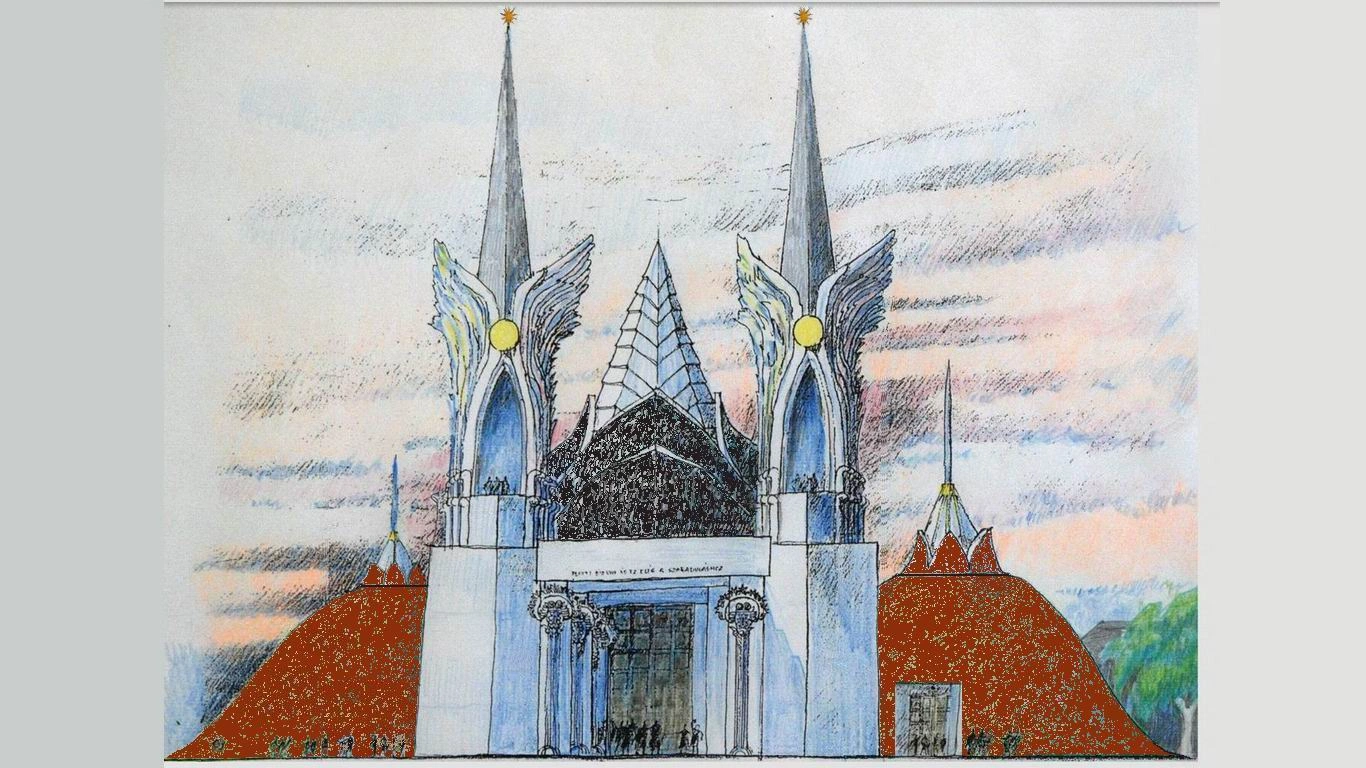
The believers wanted a church: a white one with towers, the kind they had always wanted but had not been able to build under the adverse historical circumstances. A church that would stand as a memorial to the revolution while at the same time serving the future.
In 1996 the city leadership of the time donated a plot of land to the church. The world-renowned architect Makovecz Imre drew up the plans for the symmetrical building complex. In the spring of 1999, under the leadership of pastor Gazda István, the Új Ezredév Parish was established, whose presbytery undertook the beginning of this large-scale plan.
The believers stood behind the initiative as one. With work, with donations and with much prayer they served our common cause. Our brothers and sisters of other faiths also supported the initiative, and throughout we knew the support of Bishop Tőkés László behind us.
We seized many possible means. We also organised art auctions, to which Hungarian and Romanian artists alike offered their works, so that the proceeds of the auctions could support the construction. Behind the building complex a solidarity emerged that transcended confessional and linguistic boundaries.
About the construction
When we began the construction, the small children of three or four at the time, today already grown up, recited poems at our outdoor services.
From the very beginning, the professional support and the intensive work of Dr. Földváry Attila meant serious help to the pastor.
The first ground-breaking took place on 3 November 1999. Supported chiefly by the first Orbán government, the foundations of the building bodies were completed, and one of the accommodation buildings was brought under roof in a half-finished form.
In 2013 we won a European Union project reaching across the Hungarian–Romanian border, with which we completed the other accommodation building. The building was inaugurated on 28 June 2014.
From the summer of 2017 the construction gained fresh momentum. With the help of the Szórvány Foundation we won a European Union project crossing the Romanian–Serbian border, with a church-music theme. Within its framework the building of the Chamber Concert Hall was erected, inaugurated on 26 May 2019. From then on the professional direction of the construction was taken over by the construction engineer Dr. Boros József.
At the same time the Hungarian Government came to our aid again: from December 2016 it provided significant support in several instalments. From this, first in the framework of the Hungarian–Romanian project, in the basement of the completed ecumenical wing we realised our old dream, the Hungarian Club. After that, in the accommodation building long under roof, we separated the rooms with walls, completed them, equipped them and furnished them. In this wing we arranged eight guest rooms in addition to the five already existing.
The largest part of the government support was devoted to building the church, the main element of the Centre. The building adorned with the two 40-metre towers was inaugurated on 15 December 2019.
We are aware that a construction in itself – however exceptional and noble its purpose – cannot keep a congregation alive. Therefore we strive to fill the Centre and the community with life. In the first completed wing of the Centre under construction we held our services from 2009.
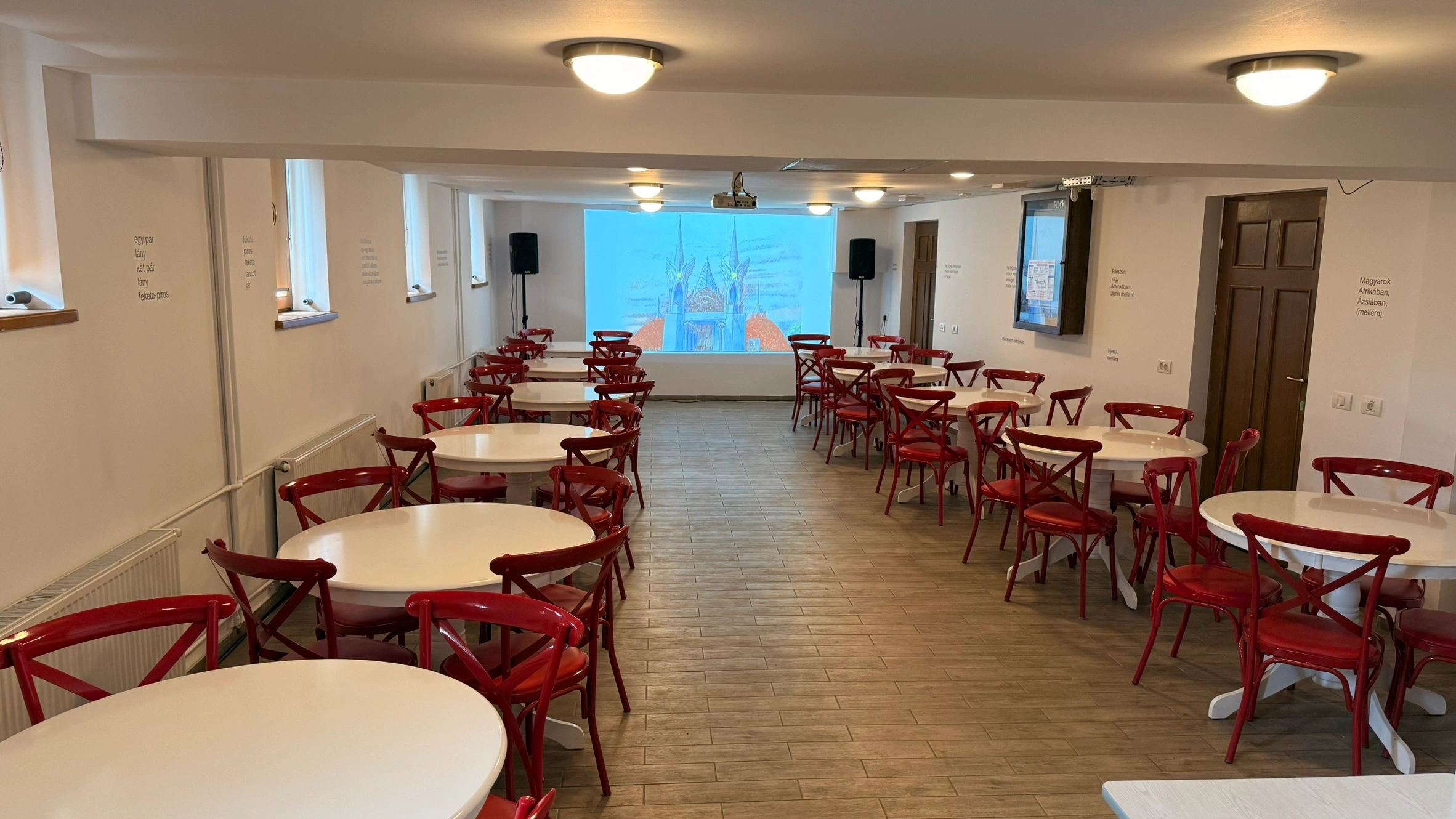
In the Hungarian Club we organise numerous cultural events, and in the Chamber Concert Hall the musical life finds its home. In the basement of the church there is an Event Hall with a capacity of 150 people, and in the corridors works of fine art have found a worthy place.
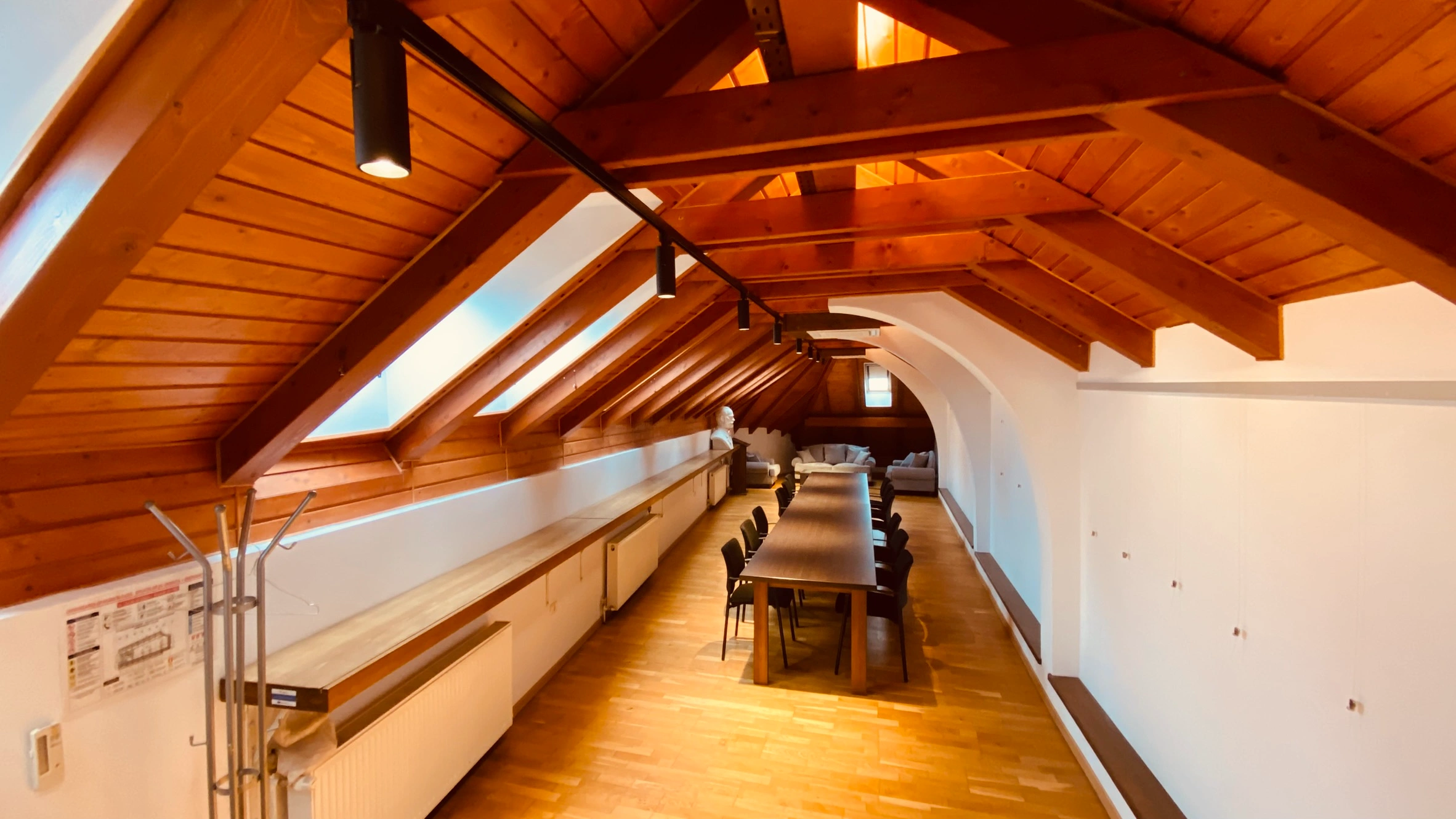
The Conference Hall was completed in the spring of 2026. In the basement we plan the operation of a Hungarian restaurant, and on the upper floor the Banatica Library will be housed with a reading room. Here we also preserve the legacy of the distinguished Timișoara writers Méliusz József (1909–1995) and Balogh Edgár (1906–1996).
We thank the Hungarian Government for its support so far, and we hope that in the near future we can complete the construction of the Új Ezredév Reformed Centre entirely.
Pastor Gazda István
Our aims
In the Reformed church, faith and culture have always gone together since the Reformation. Since a significant part of our Reformed people does not live in a mother-tongue environment, the role of our church in public life and especially in culture has strengthened again. We wish to join this service.
Alongside building up the faith, we also wish to create cultural occasions for Timișoara and for the Hungarians of the Banat. Music, the fine arts, club activities and children's programmes are all among our aims, and they complement the building up of the congregation.
“If God is for us, who can be against us?” (Rom 8:31)
Our congregation
When the congregation was formed in 1999, we came into possession of two values. One was the prayer house on Negruzzi Street, in poor condition; the other was the hope that we would soon move out of there and be able to live our community life under suitable conditions.
Pastor Gazda István visited every family on the basis of the parish directory, and with that the building up of the congregation began. The presbytery was formed, and shortly afterwards the choir and the Sunday school as well.
In the prayer house the late Naggyörgy Ida, Iduka néni, was a great help to us, who selflessly and free of charge undertook the cleaning, the heating and the cantor's duties.
The senior warden of the presbytery became Makkai Zoltán. The leadership of the choir was undertaken by the music teacher Szabó Gabriella, and the Sunday school was led by the teachers Kovács Ibolya and Makkai Barbara.
In a short time the community carrying out voluntary work also took shape, whose members were primarily the presbyters, their friends and the pastor himself. By common labour we made the prayer room usable, the courtyard friendlier, and we rebuilt the fence that had become a danger to life. In the old, outdated and damp building, however, there was always something to repair until the move to the new premises.
The construction was followed throughout by the congregation's periodical, KÚT. Its editor was Gazdáné Mátyus Melinda, who served as the second pastor of the Új Ezredév Parish between 2000 and 2004.
On feast days we organised unusual outdoor services, to which the pastor of the congregation invited guest pastors. The confirmations were also held outdoors, on the slab of the church. A young couple likewise pledged eternal fidelity to each other on the bare concrete surface.
The presbytery
It stood at the head of the congregation from the very beginning. It did not come into being in the traditional way, nor was it elected by a congregation before which it could have lived an exemplary Christian life for years, for the Presbytery is exactly the same age as the congregation. Everything took shape in reverse order: the presbyters learned together with the congregation's members what it means to serve at the head of a new congregation, to grow into the tasks, to help the pastor map out the faithful, and to work in common to make the life-threatening prayer house safe. Our presbyters proved afterwards that they deserved the trust that had been extended to them in advance.
Members of the first Presbytery: Makkai Zoltán, senior warden, Bíró László Zsigmond, warden, Személy Klára, Bodnár Sarolta, Sepsi Béla, Furinda András, Vetési Zoltán, Bíró Tibor.
Alternate presbyters: Péter Enikő. This community has remained unbroken ever since; even if no longer as presbyters, nearly everyone serves with joy as a member of the congregation and takes part in our various activities.
Péter Enikő lives in Hungary with her husband and their little daughter; news arrives from her too, for their wedding was held in the bare space of the church vault and, as such, was a unique occasion, an extraordinary experience for us all.
Those who over the years still bore the office of presbyter: Cioráné Csepei Erzsébet, Fazekas András, Dózsa Sámuel, Erdei Lajos-Árpád, Dr. Kása József, Oláh István, Palicsák Ilona, Szabó Csaba-Oliver presbyter and warden, Szabóné Szávits Gabriella, Téglásy Sándor-Gábor, Viczéné Ciolac Éva.
The present Presbytery: Makkai Zoltán, senior warden, Kindle János, warden.
Presbyters: Bíró Tibor, Fazekas Mária, Furinda András, Isopescuné Tóth Emma, Kovács Ibolya, Lehőcz László, Szabó Dezső, Szabó Péter, Szórád István, Vetési Zoltán.
Alternate presbyters: Fekete Julianna, Kenderesi Ferenc, Szép Mózes, Tóth Ildikó.
This Presbytery too has unusual tasks: it also stands at the head of a congregation in motion, a congregation that makes sacrifices for a wider community, for the Hungarians of the Banat. The building complex is taking shape, and this naturally reflects back on our community. Where is the boundary between congregational life and Hungarian cultural and community life?
If we wish that an ever more varied and eventful life may take shape within the walls of the building on the bank of the Bega – we can support the community, by the purchase of brick certificates, by our participation or even by physical help. Everyone can find their own means.
The Új Ezredév Choir
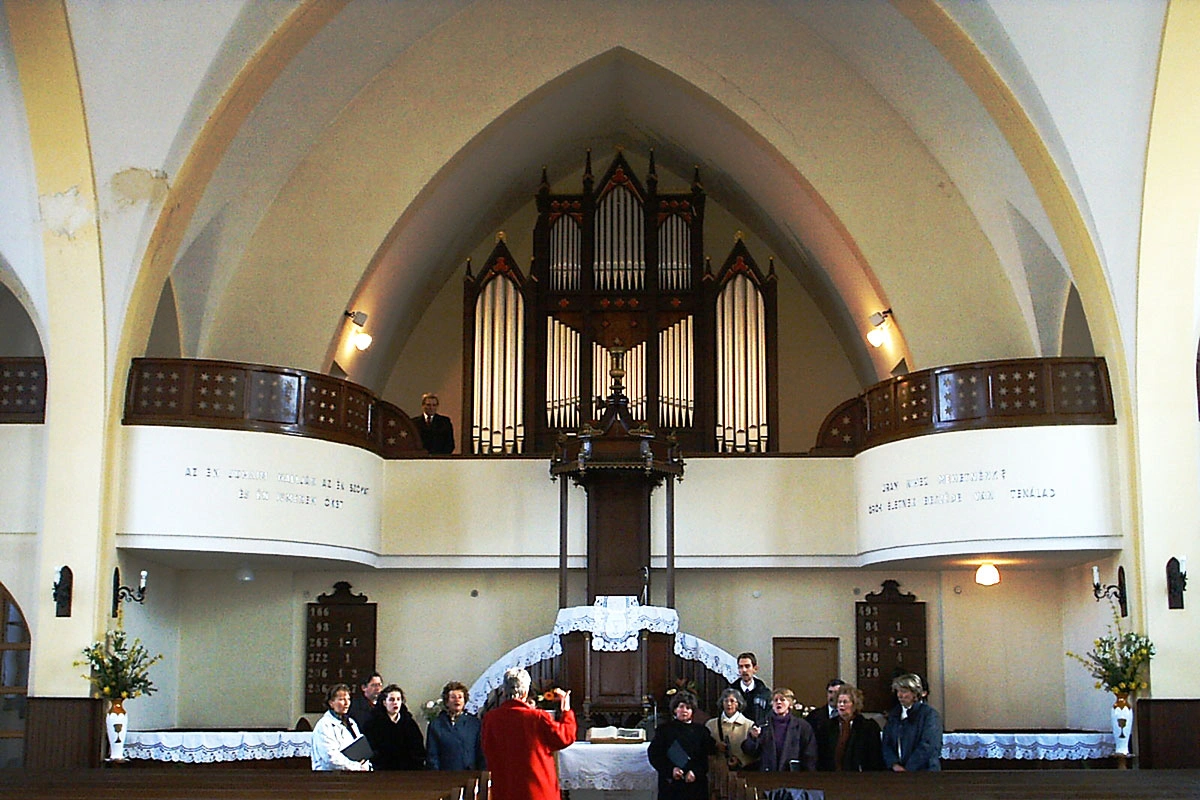
We also tried to translate the momentum of the new, young congregation into song. Thanks be to God, the music teacher Szabó Gabriella undertook the leadership of the choir, so that in October 2000 our choir could be formed.
Above all the choir made the outdoor services more festive, but it also sang at various music festivals and at the celebrations of other congregations. They also visited other places, Hungarian and southern Hungarian localities, as well as the church of the sister congregation of Rákospalota–Óváros, where they served with song.
In 2025, after 25 years, the leadership of the choir was taken over by the organist Ciurtin Viorel, the cantor of our church, who continues to devote himself gladly to the choir.
Sunday school
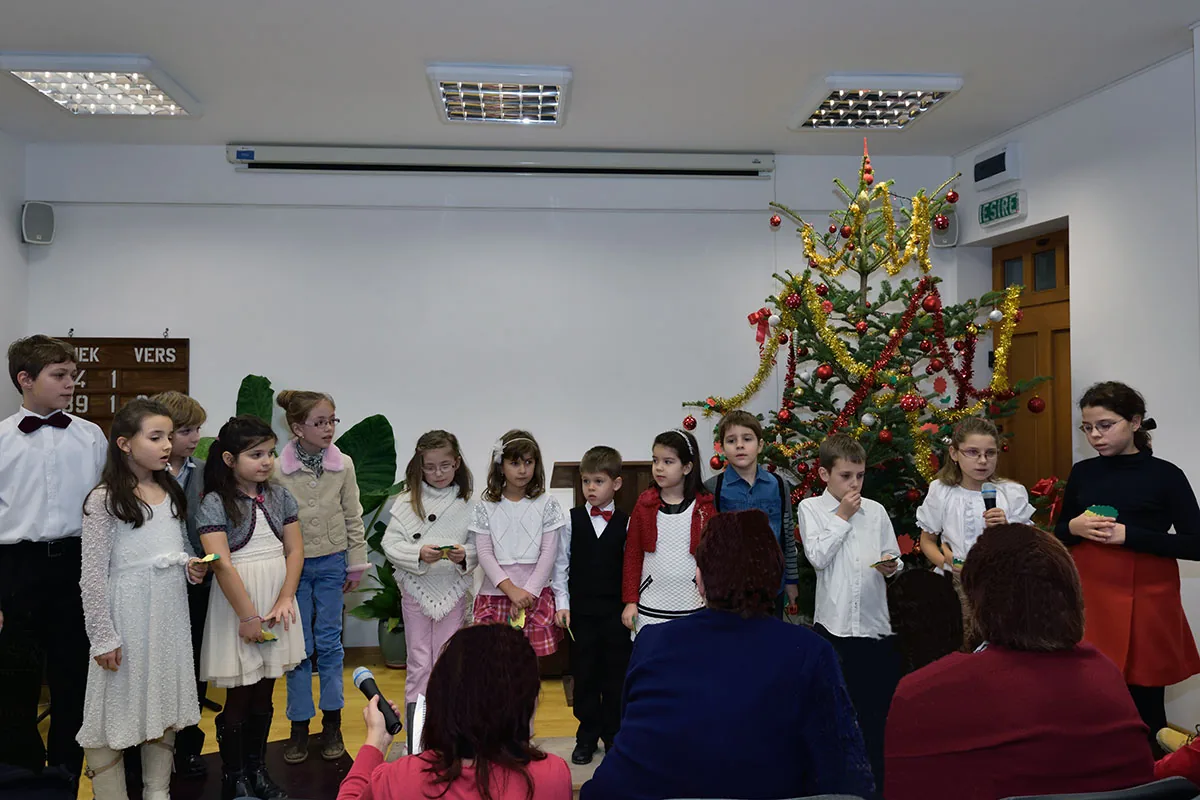
For the parents who attend the service, the children's activity has been a great help almost from the beginning. While the parents take part in the service, educators look after the children in the neighbouring room.
At present the activity is led by Kovács Ibolya, where the visiting children learn songs and Bible stories.
Puppet group
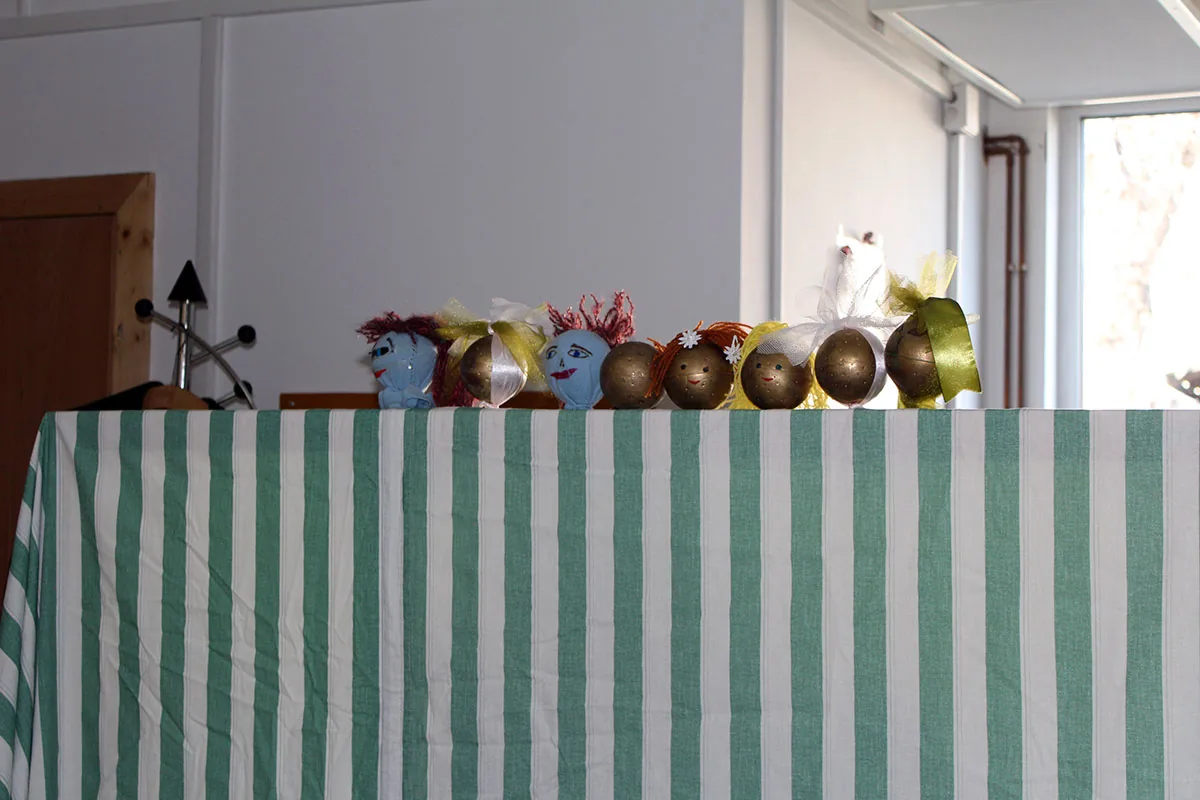
The puppet group began in 2014, the year of the EU-supported construction, almost in the middle of the building site, and ran until 2021. The activity was understood primarily as an artistic activity, within which enjoyable, well-rounded performances were created. The activity was not determined by drama-pedagogy considerations.
The activity was led by the pastor Gazdáné Mátyus Melinda. Their first performance was a stage adaptation of Kolozsvári Grandpierre Emil's tale “Kikből lettek az ország nagy fiai”.
Women’s Association
The congregation’s Women’s Association held its founding meeting on 10 October 2020. Later pastoral reports record the members’ contribution to community life and charitable support, including preparations for church celebrations, Christmas packages for elderly or ill members of the congregation, and participation in women’s association meetings. Information about the current programme and contact is available from the pastoral office.
Bible study
The congregation's programme also includes a Bible study. These gatherings are held every Thursday at 11:00 a.m.
Our church tourism publications
During the year and a half of the European Union-supported construction, we published three colourful, informative publications that filled an existing gap.
1. Church tourism routes in Timiș County
2. Religious tourism routes in Csongrád County
3. New church tourism sites in Timiș and Csongrád Counties
The chronicle of our congregation – the pastoral reports
We gladly share with the members of our congregation and with those interested what has taken place among us, so that everyone may gain the best possible insight into the many facets of the life that unfolds here. Perhaps the most faithful and most detailed record of this are the pastoral reports, approved by the presbytery and adopted annually by the congregational meeting.
KÚT and publications
KÚT began in 1999, edited by Gazdáné Mátyus Melinda and laid out by Makkai Zoltán. At first it appeared six times a year. The periodical chronicled the congregation's life and the construction, and also published writing on faith and culture. During the European Union-supported construction period, the second phase of KÚT appeared in Hungarian and Romanian, with an ecumenical perspective and layout by Farkas Melánia.
Three church-tourism publications were also produced: «Egyházi turisztikai útvonalak Temes megyében», «Vallási turisztikai útvonalak Csongrád megyében» and «Új egyházi turisztikai helyszinek Temes and Csongrád megyében». These publications presented the church-tourism connections of the centre and the region.
Other printed materials included a fundraising sheet, an art-auction catalogue and an introductory publication prepared for the 2014 inauguration of the F building.
For current programmes and ways to take part, please enquire at the pastoral office.
Contact the pastoral office